blog
Why Collective Aarti Creates Social Calm
👤
DivyaDrishti Editorial
Feb 09, 2026
7 min read
0 reads
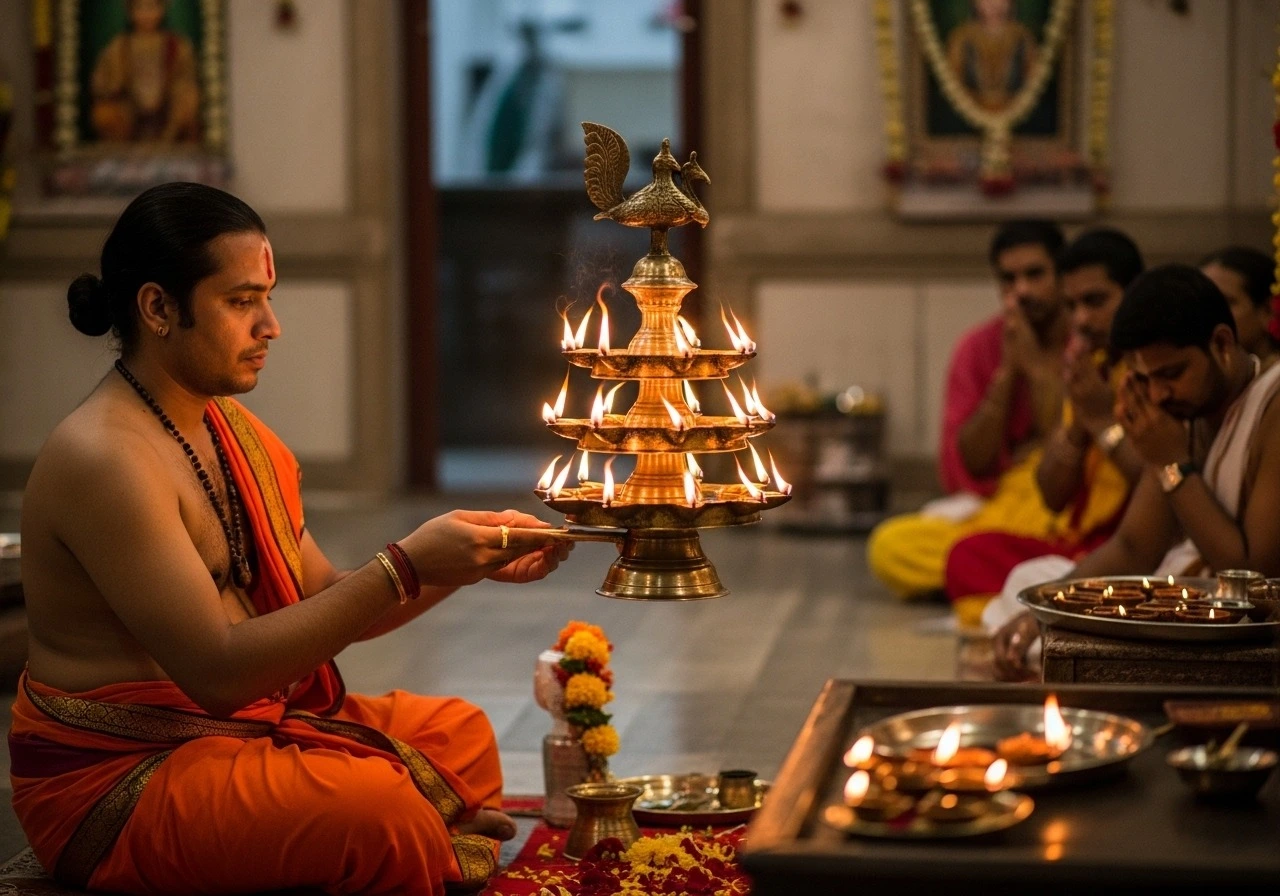
From the outside, collective aarti looks simple—lamps moving in circles, bells ringing, a familiar melody, people standing close together.
But beneath this simplicity lies one of the most efficient population-level calming systems ever designed.
Humans Regulate Emotion Socially
Human nervous systems do not stabilize in isolation.
We regulate through other people.
When movement is rhythmic, attention is shared, and hierarchy is minimized, nervous systems co-regulate.
Collective aarti satisfies all three.
You do not have to stabilize yourself.
The group does it with you.
Why the Rhythm Matters
Slow circular motion removes urgency.
Nothing is competing.
Nothing is accelerating.
Anxiety diffuses.
Aggression softens.
Collective Attention Is a Biological Signal of Safety
When many people focus together, the brain reads safety.
During aarti:
• gaze converges
• posture stabilizes
• movement slows
The amygdala downshifts automatically.
Non-Verbal Unity
Collective aarti works below language.
No belief required.
Only participation.
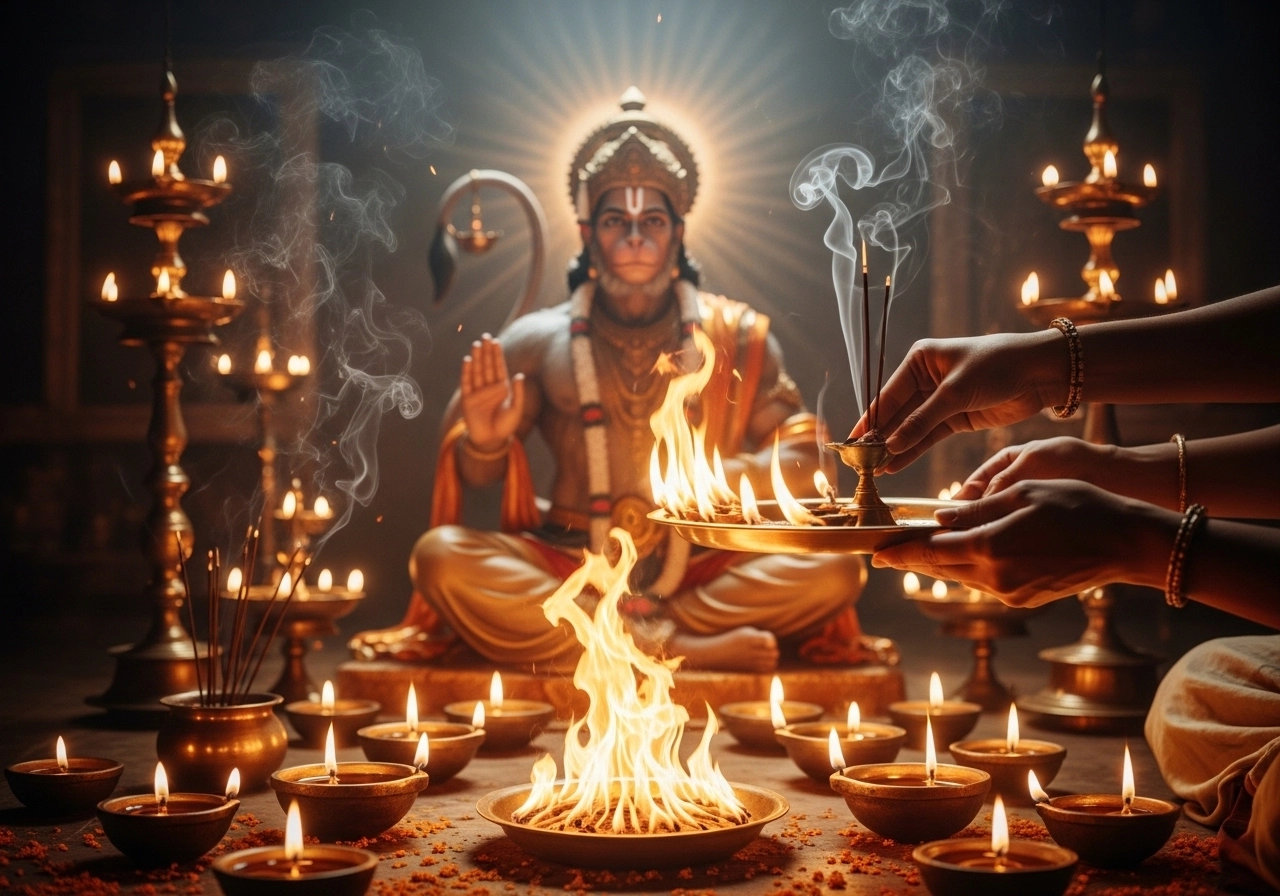
Why Hanuman Aarti Is Especially Grounding
Hanuman worship signals:
• strength without domination
• stability without emotional drama
People leave feeling stronger, not softer.
Minimal Hierarchy Creates Maximum Regulation
Everyone shares the same sensory stream.
This creates regulation, not spectatorship.
Why Modern Societies Need This
Modern life fragments attention.
Collective aarti restores shared rhythm.
Why Tempers Cool in Temples
The rhythmic environment recalibrates emotional baselines.
Closing Insight
Collective aarti is not prayer for gods.
It is maintenance for society.