blog
Why Hanuman Sleeps with One Eye Open – Symbolism of Conscious Guardianship
👤
DivyaDrishti Editorial
Feb 01, 2026
5 min read
0 reads
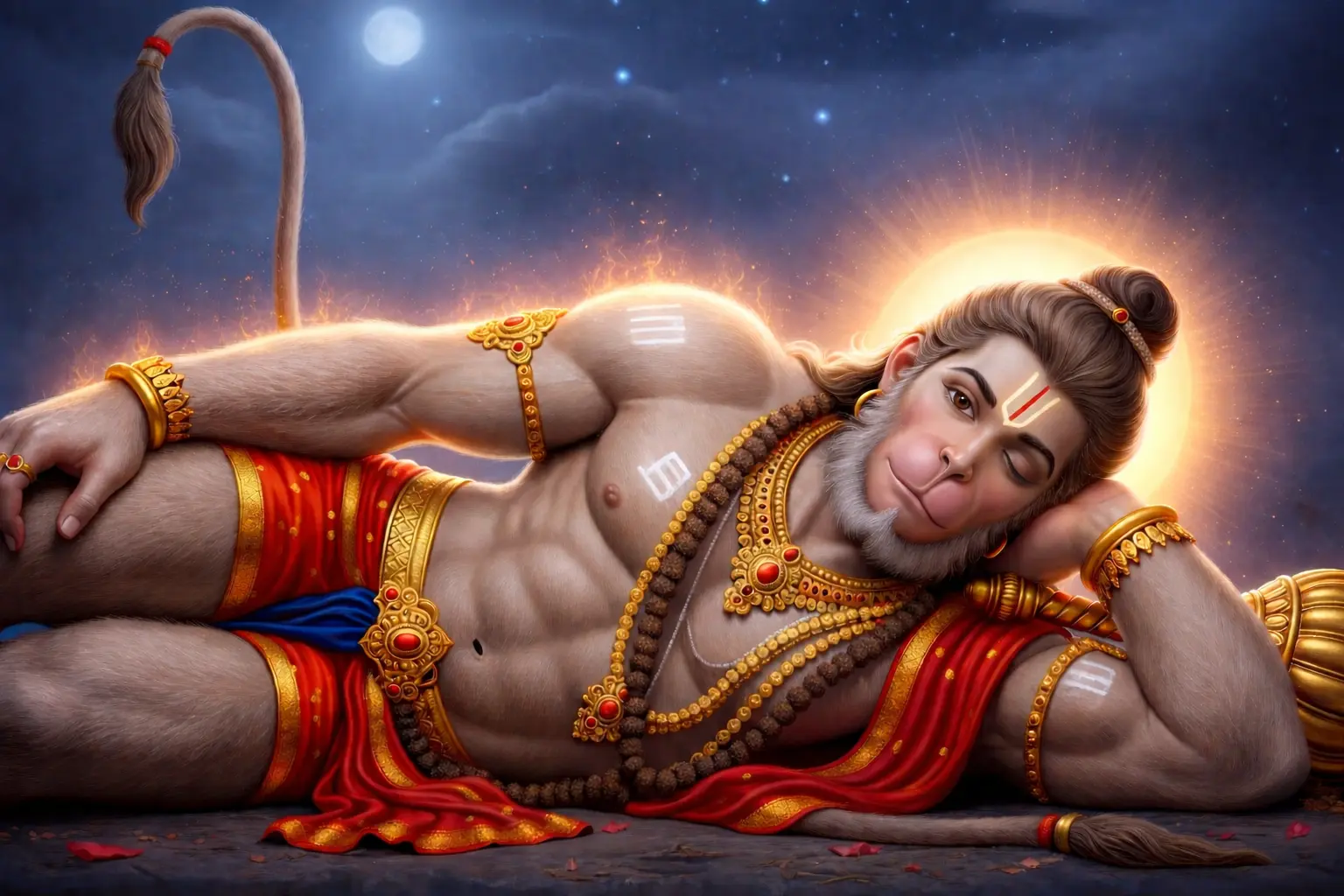
In most spiritual traditions, sleep is seen as withdrawal — withdrawal of the senses, of attention, of responsibility. It is the moment when the outer world is set aside and the individual turns inward. Yet in the living faith of Sanatan Dharma, Hanuman breaks this pattern in a deeply meaningful way. Devotees often say that Hanuman sleeps with one eye open. This is not a poetic exaggeration. It is a precise spiritual idea — the idea of conscious guardianship.
At the Lete Hue Hanuman Ji Mandir in Lucknow, this belief becomes visually powerful. Unlike the more common standing or seated forms, here Hanuman is seen reclining — calm, grounded and unmoving. But the atmosphere of the temple tells a very different story. There is stillness, yes, but not absence. There is rest, but not disengagement. There is silence, but not vulnerability.
This form of Hanuman quietly teaches that true protection does not always come from visible action. Sometimes, it comes from unwavering presence.
Sleep vs Samadhi
Sanatan Dharma makes a clear distinction between nidra (sleep) and samadhi (resting awareness). Nidra is a natural shutting down of sensory activity. Samadhi, however, is an inwardly rooted state in which awareness remains fully alive.
Hanuman’s rest is not exhaustion. It is not the sleep of someone who has finished his duty. It is a voluntary stillness — where the body relaxes but awareness remains deployed.
This is why, in devotional imagination, Hanuman is never “unavailable.”
He is not a deity who rests after victory. He is a protector who rests while still protecting.
The reclining form at Lete Hue Hanuman Ji Mandir expresses this subtle truth with extraordinary clarity. The posture may appear relaxed, but the spiritual message is firm: vigilance does not require tension.
The Guardian Archetype
Across cultures and civilizations, true guardians are never portrayed as restless or aggressive. They are calm, steady and deeply alert. Hanuman represents this archetype in its purest form.
Psychologically, his posture reflects:
• no anxiety
• no fear of sudden disruption
• complete confidence in readiness
In modern terms, Hanuman operates in a low-latency awareness state — a mind that does not drift, yet does not strain. His strength is not reactive. It is stable.
This is precisely why the reclining form does not feel weak. It feels unshakable.
At the Lete Hue Hanuman Ji Mandir, devotees often describe an unusual sense of emotional security. Not excitement. Not emotional high. A quiet reassurance — the feeling that something powerful is already taking care of what cannot be seen.
One Eye Open – Dual Awareness
The popular belief that Hanuman sleeps with one eye open holds a deeper symbolic meaning. It represents dual awareness:
• one eye inward — devotion, humility, surrender to Shri Ram
• one eye outward — protection, service, readiness to act
This dual orientation explains a rare spiritual integration. Hanuman is not divided between prayer and duty. He does not switch between devotion and action. He embodies both at the same time.
This is why Hanuman is remembered as both the greatest devotee and the fiercest warrior. His devotion does not weaken his strength. His strength does not dilute his humility. The two coexist without conflict.
The reclining posture at this Lucknow temple becomes a visual reminder of this integration. Inner silence and outer responsibility do not cancel each other. They stabilize each other.
Why This Resonates Today
Modern life is marked by fragmented awareness:
• the body is present, but the mind is elsewhere
• rest happens, but recovery does not
• alertness exists, but grounding is missing
People are either constantly tense or mentally absent. Hanuman’s form offers a radically different architecture of living.
Rest the body.
Keep the mission alive.
This message feels especially relevant to visitors at Lete Hue Hanuman Ji Mandir. The temple does not generate emotional intensity. Instead, it generates psychological steadiness. People leave feeling anchored — not stimulated.
Closing Insight
Hanuman does not guard by standing tall.
He guards by being unshakably present.
At Lete Hue Hanuman Ji Mandir in Lucknow, the reclining form quietly teaches that protection does not always come through visible action. It comes through unwavering awareness, disciplined humility and silent readiness.
This is the deeper meaning of Hanuman sleeping with one eye open.
This is conscious guardianship.