blog
Why Children Feel Drawn to Hanuman Before They Understand Him
👤
DivyaDrishti Editorial
Feb 07, 2026
7 min read
0 reads
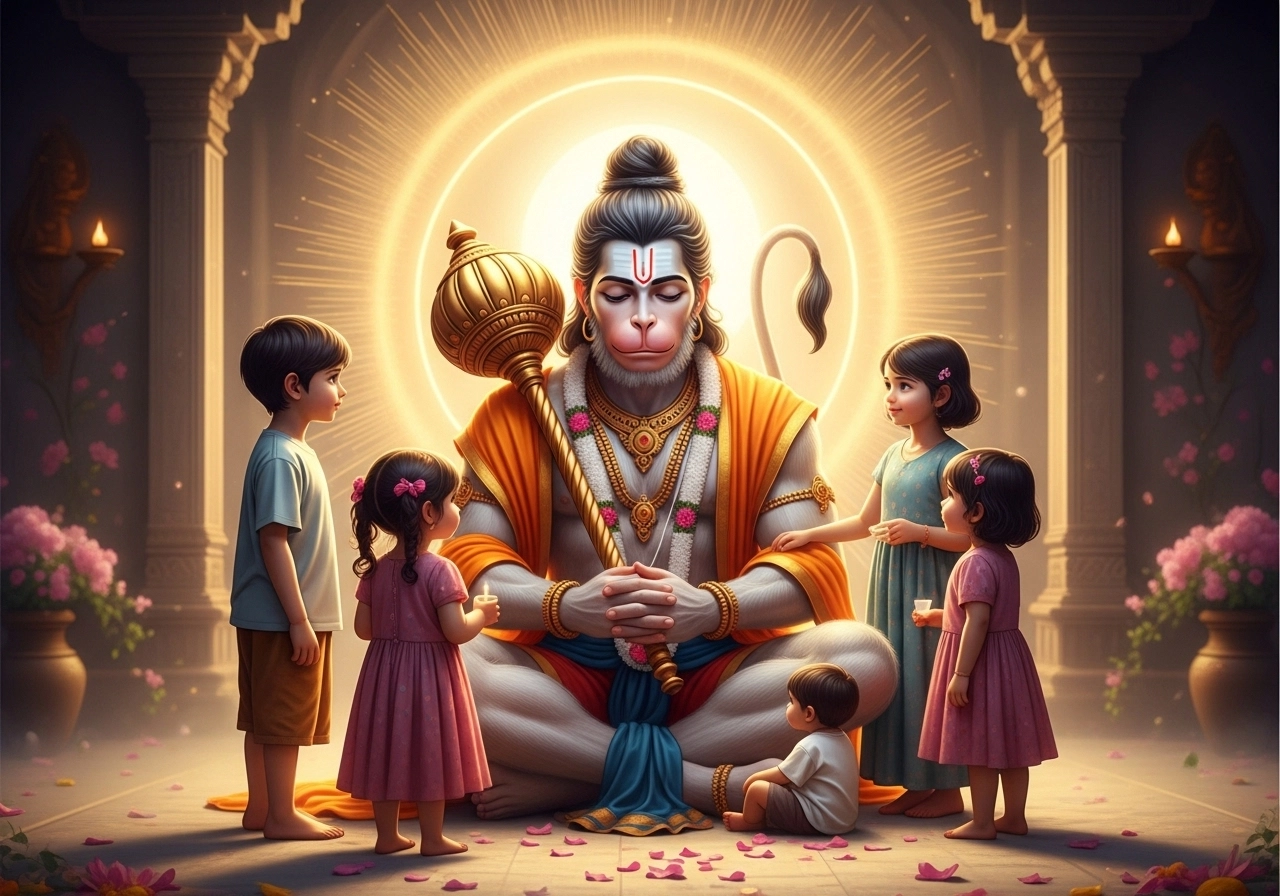
Children respond to Hanuman in a way that is noticeably different from how adults do. They do not analyze the story. They do not decode symbolism. They do not compare traditions. They simply recognize something.
This response is not accidental.
It reveals something essential about how bhakti is transmitted.
Hanuman is not first understood.
He is first felt.
A Pre-Linguistic Connection
Children connect to Hanuman long before language, philosophy or religious structure enters the picture. This happens because Hanuman’s presence operates at a pre-cognitive layer of perception.
Psychologically, children are scanning for emotional safety.
They evaluate:
• safety
• consistency
• predictability
Hanuman communicates all three without words.
Form Without Intimidation
Hanuman’s imagery combines:
• immense power
• emotional softness
• humility and loyalty
Children see him as reliable, not threatening.
Strength That Does Not Demand Attention
Hanuman’s strength exists in service, not self-display.
Repetition and Familiarity
Hanuman bhakti uses repetition that matches a child’s nervous system.
Transmission Without Instruction
Children learn through observation, not explanation.
Emotional Availability Over Conceptual Belief
Hanuman is emotionally accessible without intellectual demand.
Why This Becomes Lifelong Bhakti
Early emotional safety becomes lifelong spiritual anchoring.
Closing Insight
Hanuman does not ask children to believe.
He simply stays available.