blog
Human Vision Is Limited — Darshan Was Never About the Eyes
👤
DivyaDrishti Editorial
Feb 05, 2026
9 min read
0 reads
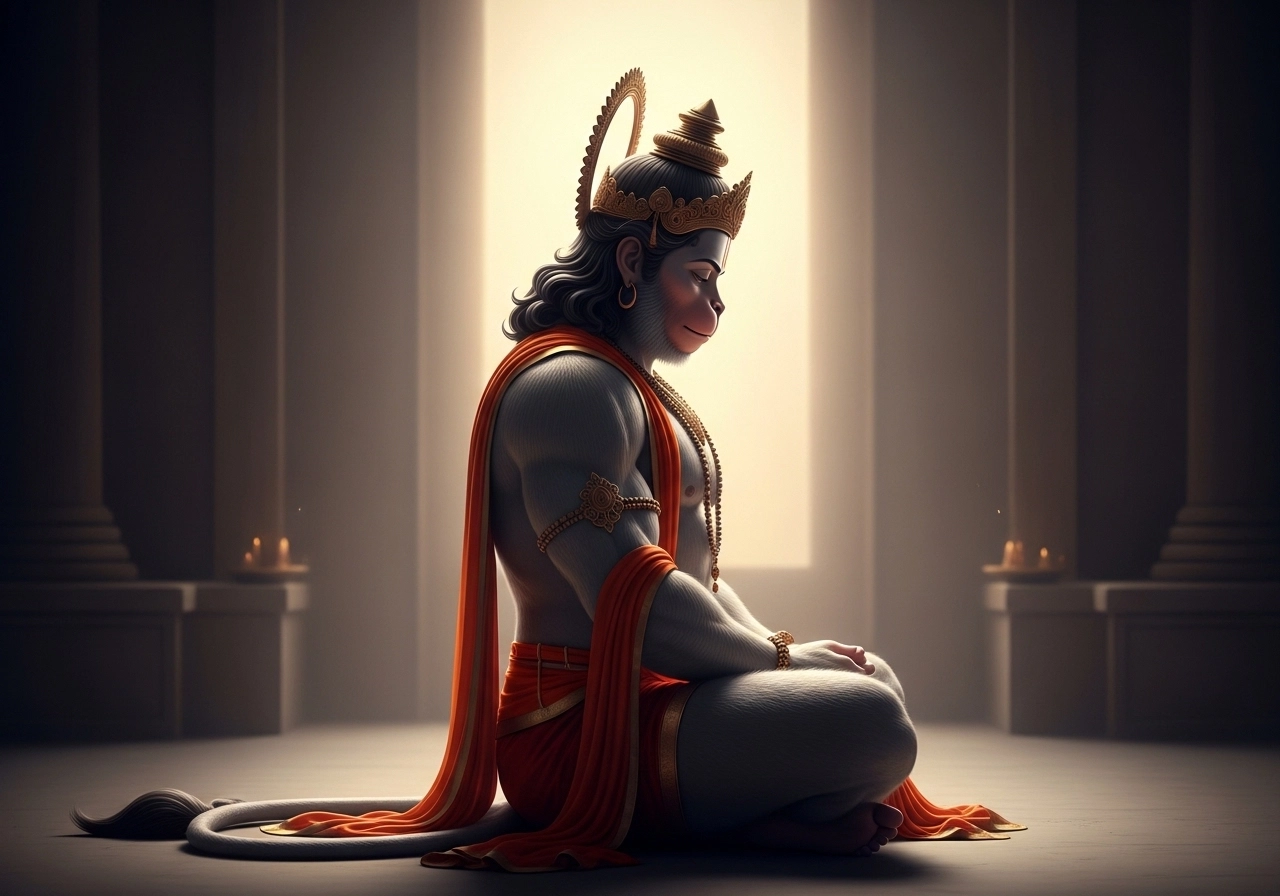
Modern humans quietly assume that better seeing leads to deeper knowing. Higher resolution, sharper focus and closer access are treated as improvements to understanding. Neuroscience strongly challenges this belief. Sanatan Dharma, however, never depended on it in the first place.
Darshan was never designed for the eyes.
It was designed for perceptual alignment.
The eyes participate — but they do not lead.
The Hard Limits of Human Vision
Biology places strict constraints on what human vision can actually process.
We see only a tiny fraction of the electromagnetic spectrum. Entire ranges of information exist around us that the eye simply cannot register. What we call “reality” is already a heavily filtered version of what is present.
More importantly, emotional processing is driven far more by peripheral vision than by sharp central focus. The nervous system continuously reads motion, space and light distribution at the edges of perception to regulate safety and orientation.
At the same time, detail-based vision — the kind used for reading, scanning and close inspection — is cognitively expensive. It fatigues the brain rapidly and increases mental narration.
This creates an uncomfortable truth.
If darshan depended primarily on visual sharpness and sustained looking, it would fail most of the time.
Yet it does not.
Darshan works precisely because it was never built on the assumption that vision is reliable enough to carry meaning by itself.
Why Temples Are Dim by Design
Ancient temples were intentionally constructed as low-light environments.
Low light:
• reduces visual scanning
• weakens detail analysis
• shifts processing toward the limbic system
Darshan is supported not by visibility, but by psychological quiet.
Darshan as a State Shift
Darshan occurs when:
• visual hunger drops
• mental narration quiets
• attention stabilizes
Darshan is not an optical event. It is a perceptual reconfiguration.
Why High-Definition Can Ruin Darshan
High-definition visuals activate control, comparison and preference.
Darshan requires perceptual constraint, not enhancement.
Darshan does not deepen through clarity.
It deepens through containment.
Closing Insight
Eyes are tools.
Darshan is a condition.