blog
Darshan Is Not Visual Consumption
👤
DivyaDrishti Editorial
Feb 04, 2026
6 min read
0 reads
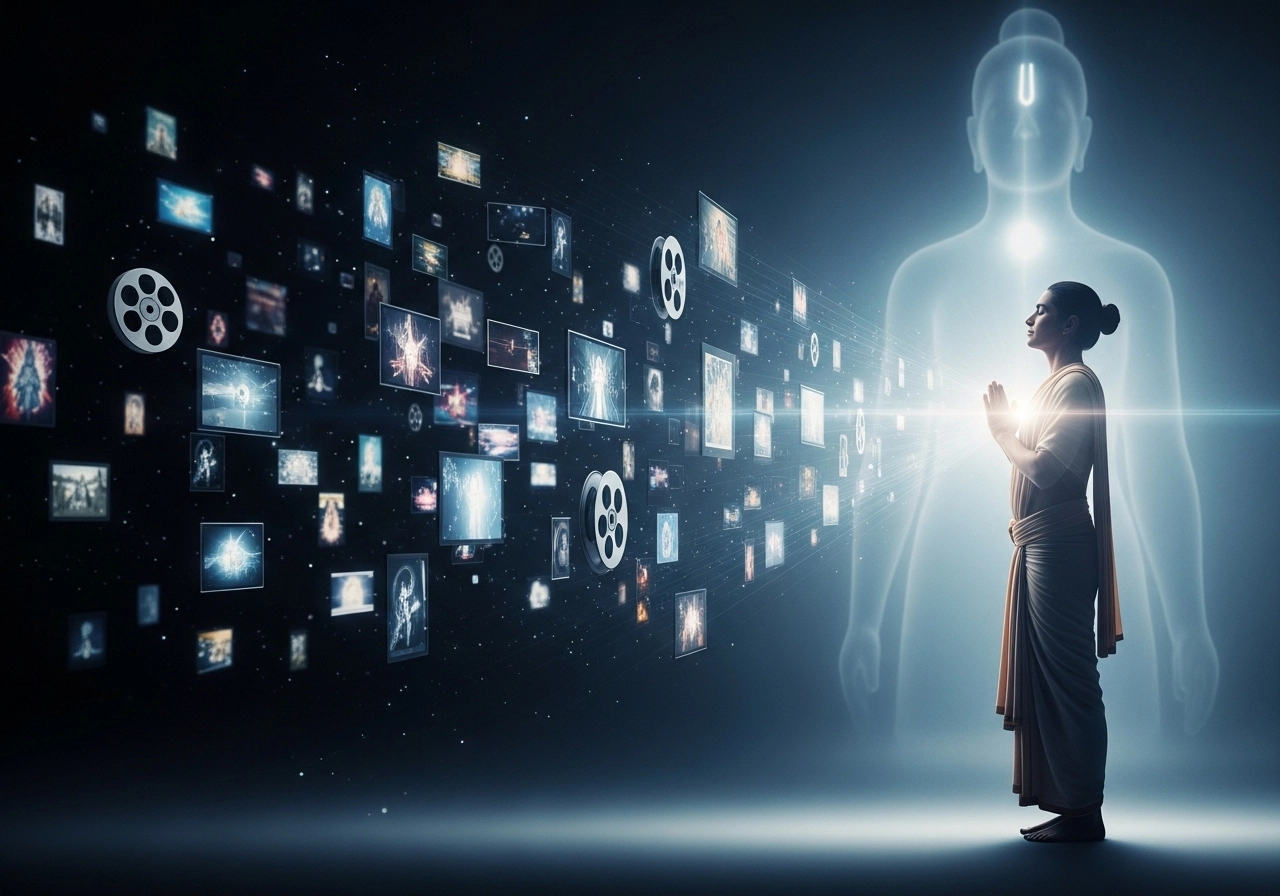
The modern world has trained us to believe that seeing equals knowing. Screens, feeds and reels reinforce the idea that perception is a form of ownership. If something has passed through our eyes, we assume it has entered our understanding. Darshan shatters this assumption at its root.
In Sanatan Dharma, darshan is not a visual act. It is an act of alignment.
This distinction becomes especially important in an age where almost every meaningful experience is mediated through a screen. Darshan belongs to a completely different psychological and spiritual architecture.
Seeing vs Being Seen
In visual consumption, the structure is clear.
The subject is passive.
The viewer is in control.
Engagement is extractive.
We scroll. We choose. We skip. We replay. The image exists for our attention.
Darshan reverses this orientation.
In darshan, the deity is active.
The devotee is receptive.
Engagement is relational.
This is why devotees say “darshan mila” — darshan was received — not “maine dekha”.
Darshan is not about directing attention outward. It is about placing oneself inwardly into a state where attention can be shaped.
Why Crowds Don’t Ruin Darshan
A fleeting glimpse can feel complete.
A long stare can feel empty.
Darshan is state-based, not angle-based.
The Brain’s Role
Prediction quiets down. Attention becomes receptive rather than strategic.
Darshan is less about what enters the eyes, and more about what exits the mind.
Darshan in the Digital Age
Yes — if receptivity is preserved.
No — if it becomes entertainment.
DivyaDrishti is about engineering receptivity, not visual enhancement.
Closing Insight
You do not go for darshan to see God.
You go so that something in you is seen.