blog
Temples Were Never Just Spiritual Spaces — They Were Civilizational Infrastructure
👤
DivyaDrishti Editorial
Feb 10, 2026
5 min read
0 reads
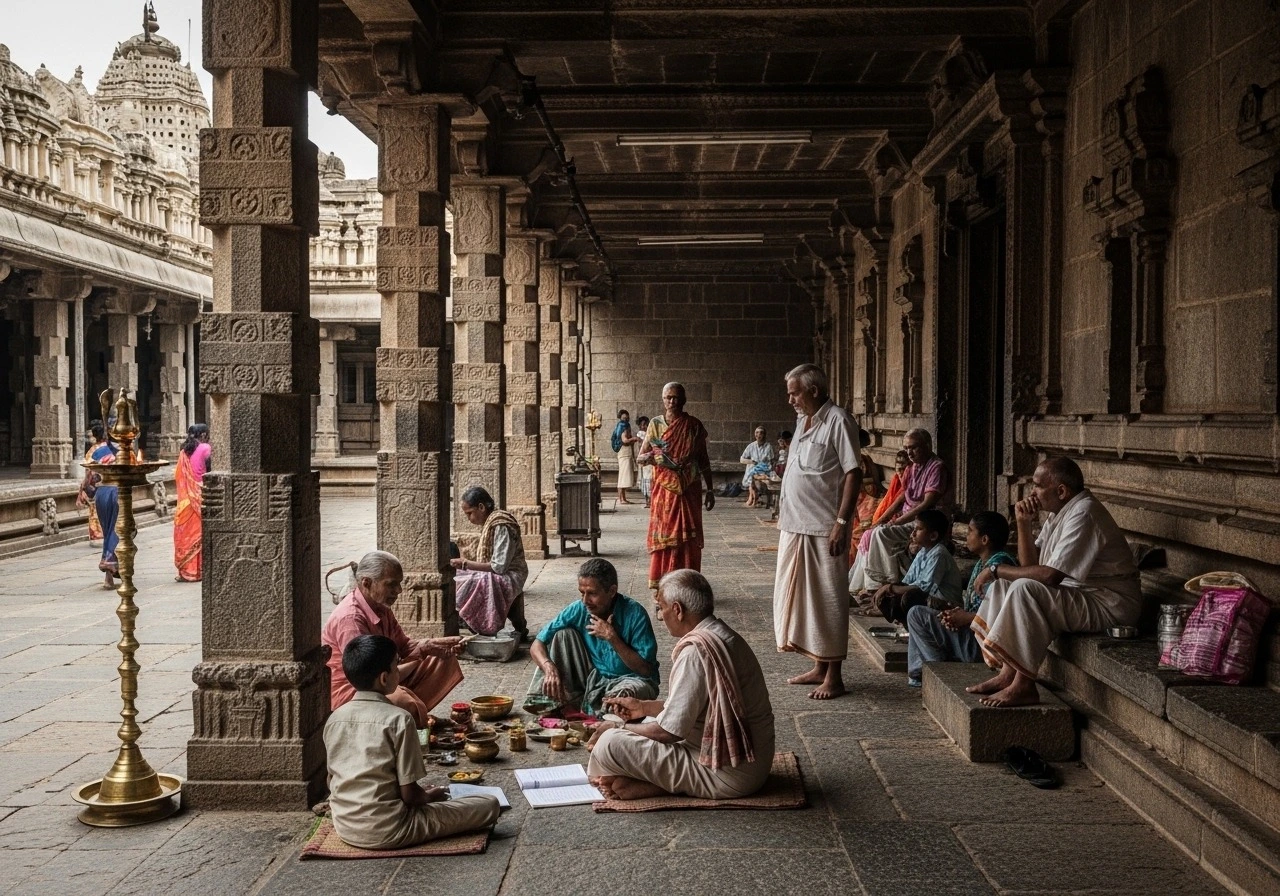
Modern society treats temples as places of worship. Historically, this is inaccurate.
In Sanatan civilization, temples were multi-layered infrastructure nodes—psychological, social, cultural and ethical.
The spiritual function was visible.
The regulatory function was silent.
And far more powerful.
Temples as Stabilizers
Before courts, clinics or mental health systems existed, temples managed human emotional instability.
They served as:
• predictable gathering points
• emotional reset zones
• moral orientation anchors
Architecture as Behavioral Engineering
Temple design ensured:
• flow, not speed
• containment, not expansion
• resonance, not amplification
The body slowed automatically.
The mind followed.
Temples as Emotional Equalizers
Inside temples, hierarchy softened.
Everyone moved together.
Pilgrimage as Psychological Reset
Pilgrimage disengaged people from identity roles and restored social coherence.
Temples as Moral Anchors
Values were transmitted through posture, rhythm and observation.
What Modern Systems Lost
Modern spaces amplify stimulation, not regulation.
Digital Darshan’s Role
Digital darshan cannot replace temples, but can extend their calming function if designed with restraint.
Closing Insight
Temples regulated attention, stabilized emotion and synchronized society.
They were infrastructure for the human nervous system.